

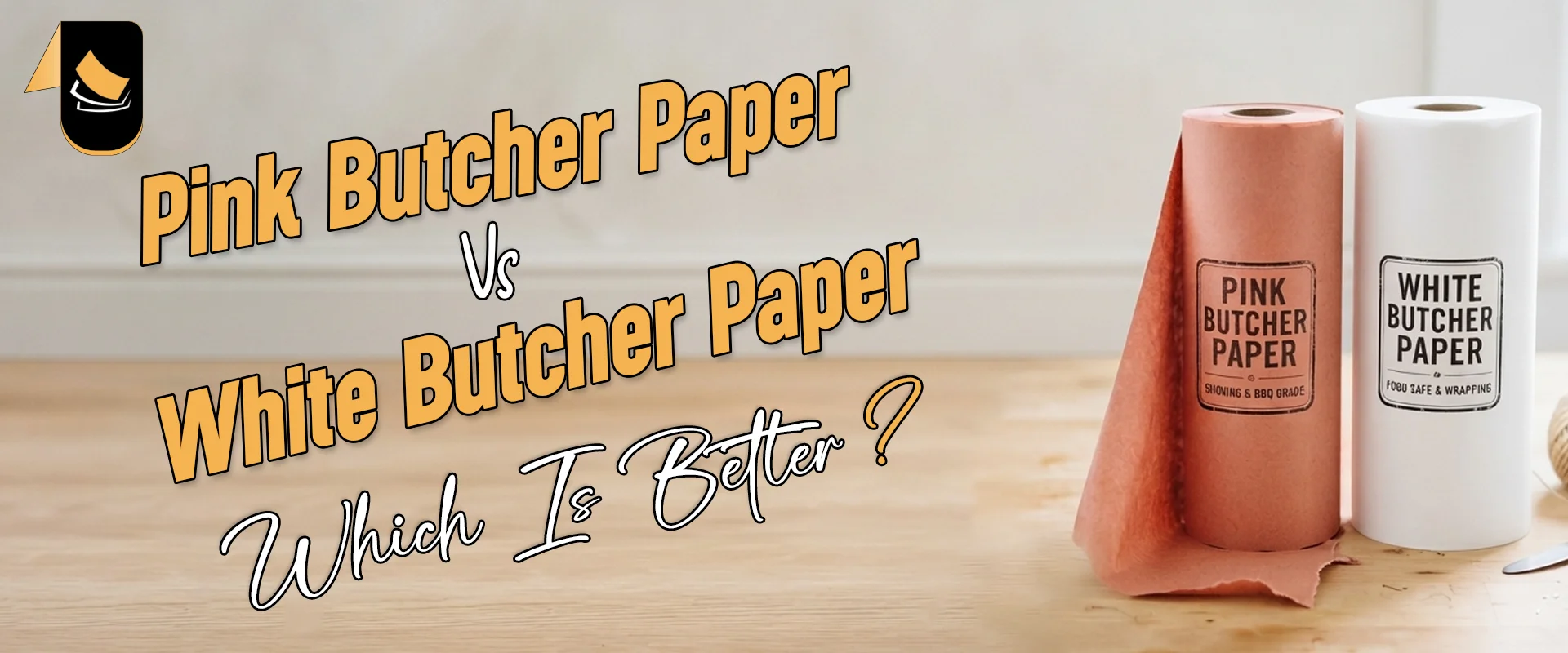
Pink vs. White Butcher Paper: Which Is Better?
Food-related businesses use butcher wrapping paper to protect food from contamination, for hygiene purposes, and for neat presentation of their raw meat, fish, or BBQ briskets. Meat wrapping papers are not limited to cafes or restaurants, but they are also used in household kitchens. Butcher papers come in various types. Even though it is used widely by people, they still don’t know which type of butcher paper is right for their particular use.
Are you also one of those people who are unaware or still confused about which type of butcher paper to choose for your raw and cooked meats? Then you have reached the
right place. This guide is definitely for you. It extensively explains the similarities and differences between the two most commonly used variants of butcher paper, namely pink and white. Both differ in their practical use and application.
What is Butcher Paper?
Butcher paper is food-safe and eco-friendly specialty paper designed specifically for wrapping raw meat or briskets. They undergo chemical processes to make it moisture- and grease-resistant. Other than meat, it can also be used as follows in the household kitchen and restaurants:
- Food packaging for takeaway and delivery
- Wrapping sandwiches or deli subs
- Serving tray liners
- Baking tray liners
- Crafts and decoration
Materials Used for Manufacturing: Pink vs. White Butcher Paper
Base materials
Pink and white butcher paper have similar base materials for their manufacturing. Both butcher sheets are derived from food-grade virgin wood pulp such as southern pine wood. The pulp goes through a process to form a strong structure, such as:
- Pressing
- Bleaching
- Sizing
- Drying
Sizing agents
The wood pulp is mixed with internal sizing to create a strong bond of cellulose fibres. The tightly packed fibres form a heavy and sturdy paper, increasing the absorbency. Sizing agents resist moisture and grease when bloody or cooked meat is wrapped.
Chemical Processing of Pink and White Butcher Paper
If you are wondering how they have different colours if they are derived from the same base materials. It is because they are processed differently in terms of chemicals and bleaching.
Pink butcher paper
It gets its natural colour from southern pine wood. Pink butcher paper is not chemically processed to retain the natural colour like kraft paper. This is why it is suitable for raw use.
White butcher paper
White butcher sheets are bleached with chlorine or oxygen to remove their natural colour and create a white and clean surface. The white surface can be used to give high contrast and vibrant printing.
Practical Use of Pink vs. White Butcher Paper
Both papers share some similarities in terms of their base materials, but their primary usage differs due to their chemical processing and coatings.
Pink butcher paper
Pink butcher paper is uncoated and free from bleach. That’s why it is usually preferred for:
- Wrapping cooked meat to preserve heat and freshness
- Smoking briskets such as Texas crutch
- Lining or serving trays
- Roasting meat or BBQ
- Low and slow cooking
- Microwave oven at low temperatures
- Neat presentation of cooked meat
- Hot fast food and deli items
White butcher paper
Based on the chemical processing and coatings. It is usually suitable for the following:
- Wrapping fresh or raw meat
- Display of meat in butcher shops
- Art and crafts
- Wrapping cold sandwiches
- Serving trays
- Enhances food presentation if printed
- Tabletops
Can they be used interchangeably?
Despite being different in their properties, they can be used alternatively, but there are some conditions that should be considered. Keeping in view the following conditions is necessary for desired results.
Pink and white butcher paper can be swapped for:
- High-heat cooking if White butcher paper is labelled as uncoated or unwaxed
- Serving and lining trays
- Wrapping warm or cold sandwiches
- Display of food on counters
- Tabletops or dining for messy meals
- Arts and crafts
Pink and white butcher paper can not be swapped:
- If white butcher paper is waxed or coated, it can not be swapped with pink butcher paper for cooking on high heat or smoking, as wax may start melting.
- If you are storing raw meat or long-term in the freezer then pink butcher paper can not be used as an alternative for white butcher paper. Doing so can result in freezer burns or leaking of meat juices, as pink paper is semi-porous.
Performance in terms of Heat, Grease, and Moisture
They differ in their heat and moisture-resistant properties on the basis of their mechanical and chemical processes.
Pink butcher paper
This is designed especially to endure high heat during cooking, smoking or roasting meat. It can withstand temperatures up to 230℃ (450℉) while maintaining its structure.
The breathable structure allows excess heat to escape, which contributes to forming bark on meat during low-and-slow smokes. It is highly grease-resistant and has the ability to absorb extra fat or oils. The high wet strength holds juices well and prevents the paper from getting soggy or tearing.
White butcher paper
This type of butcher paper is usually waxed or comes with a plastic lining, so it is not preferred for smoking or oven use. The coated paper has poor heat resistance, but it can trap moisture and steam inside very well. However, if it’s uncoated it can cause tears and break if exposed to moisture for a long time.
Printing on Pink vs. White Butcher Paper
Printing on butcher paper can help in branding and promoting your business. You can reach out to us for high-quality and food-grade inks and printing services. Custom printing gives you the opportunity to incorporate the following:
- Display of brand logos
- QR codes
- Patterns or artwork that reflect your brand
- Taglines
- Promotional texts, etc.
Pink butcher paper has a natural and rustic look. It is preferred to use dark tones for printing and confirm with your contractor that they use heat-resistant and food-safe inks for printing, as they are used for cooking over high heat.
White butcher paper is suitable for all colours. Its surface creates fine and detailed printing. It is usually preferred for wrapping colourful sandwiches and presenting large cuts of meat.
Environmental Impact
Pink and white butcher paper are biodegradable in nature. They naturally compost in soil as they are derived from wood pulp. The white butcher paper becomes non-biodegradable if it is waxed or coated.
Cost Difference
The cost analysis of both papers depends on the manufacturing process and coatings. Pink butcher paper has a high cost as it is a specialty paper and manufactured on demand. However, white butcher paper is used commonly globally due to its versatile nature. The high demand and large production make it cheaper compared to pink butcher paper.
Conclusion
Using the wrong paper for wrapping raw meat or smoking can result in failure, like paper turning soggy or leaking. Such failures can lead to a poor brand image and customer experience, and neither is better than the other. The result entirely depends on your application. So read our article and know the differences.
Contact us!
Have further queries? Contact us now at the given number, as we are just a call away. We offer fast customer service at Custom Greaseproof Paper. Our team is always ready to provide you with any sort of assistance. Fill out a quick quote or place your order now for exclusive discounts.